

Published on ErikNaso.com • Food & Health
The beloved West Coast chain is swapping out high-fructose corn syrup across its shakes, spreads, lemonade, and ketchup — joining a growing wave of fast-food brands responding to pressure from consumers and federal health officials.
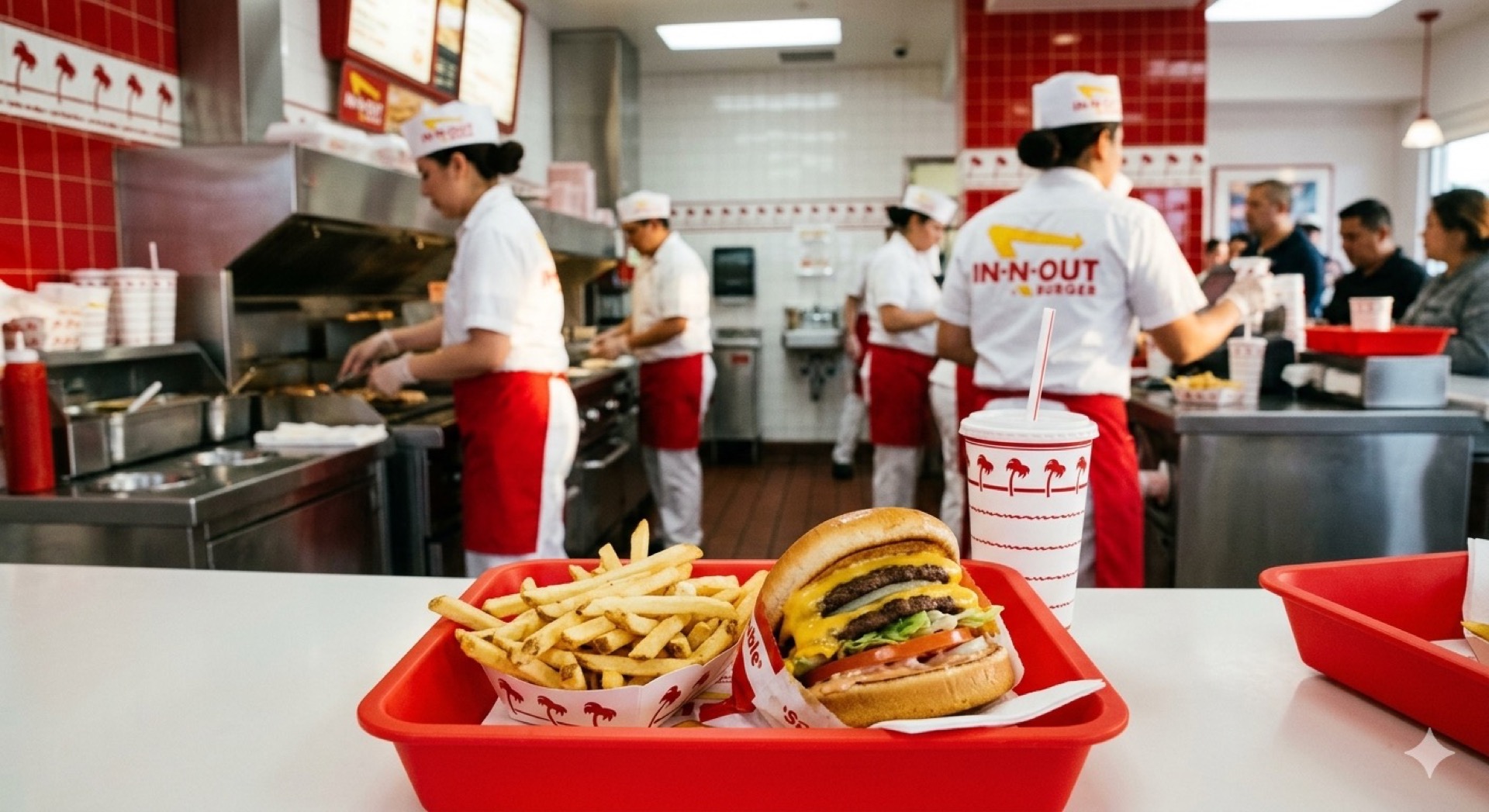
In-N-Out Burger, long regarded as one of the cleaner options in the fast-food industry, is now taking it a step further. The privately held chain announced in May 2025 that it is replacing high fructose corn syrup (HFCS) with natural sugar across several of its most popular menu items — a change that marks one of the most significant ingredient overhauls in the company’s history.
The move comes as the broader restaurant industry faces mounting scrutiny over artificial additives, fueled in part by the federal government’s Make America Healthy Again initiative and the Food and Drug Administration’s (FDA) push to phase out artificial food dyes by the end of 2026.
What’s Actually Changing
According to the company, high fructose corn syrup has been removed from the shake mix, strawberry syrup, pink lemonade, and burger spread. The chain is also transitioning to a new ketchup formulation made with real cane sugar in place of HFCS.
The changes go beyond sweeteners. In-N-Out confirmed that artificial food dyes — including Red 40 and Yellow 5 — are being replaced with natural alternatives like beta carotene, vegetable juice, and turmeric. Artificial vanilla flavoring in the shake mix is being replaced with natural vanilla. Buns will no longer contain cottonseed oil, and the preservative calcium propionate is being replaced with natural enzymes.
On the beverage side, chocolate syrup and hot cocoa will now carry natural flavors. Stevia leaf extract is being introduced as a sweetener option, replacing sucralose and saccharin, and oat milk creamer is now available as a non-dairy alternative.
In-N-Out described the changes as part of a company-wide commitment to cleaner ingredients — and notably, they are being made voluntarily, ahead of any regulatory mandate.
Why High Fructose Corn Syrup Has Been Under Fire
High fructose corn syrup has been a controversial ingredient in the American food supply since it became a widespread substitute for cane sugar in the 1970s and 1980s. Today, it appears in everything from soft drinks and condiments to bread and salad dressing — and its health implications have been the subject of decades of scientific debate.
Unlike glucose, fructose is metabolized almost entirely in the liver. When consumed in large quantities, this metabolic pathway can contribute to a buildup of liver fat, elevated triglycerides, and disruptions in insulin signaling. Research published in the American Journal of Clinical Nutrition has suggested that high consumption of fructose-containing beverages may be linked to the rise in obesity rates in the United States. A Princeton University study found that rats consuming HFCS gained significantly more abdominal fat than those consuming equivalent amounts of table sugar — even when calorie intake was similar.
A key concern is visceral fat, the type that accumulates around internal organs. This kind of fat is associated with higher risks of cardiovascular disease, type 2 diabetes, and metabolic syndrome. One controlled study found that while both glucose and fructose-sweetened beverages led to similar overall weight gain, those in the fructose group developed significantly more visceral fat over the 10-week trial period.
Research published in PLOS One found that HFCS can induce metabolic dysregulation — including altered glucose regulation — even in the absence of significant weight gain, suggesting the effects may go beyond simple calorie math.
It’s worth noting that the science is not entirely settled. Some researchers argue that HFCS and sucrose (table sugar) produce similar metabolic outcomes when consumed in equal amounts, and that the real problem is overall excessive sugar consumption, regardless of its source. The International Journal of Obesity has published research questioning whether HFCS specifically — rather than added sugar in general — is uniquely responsible for the obesity epidemic.
Still, the preponderance of consumer concern and a growing body of research have pushed food manufacturers and restaurant chains to rethink their reliance on the ingredient.
In-N-Out’s Position in a Changing Industry
In-N-Out has historically distinguished itself from competitors through a short, simple menu and a commitment to fresh ingredients — no freezers, no microwaves, beef delivered fresh daily. The new ingredient changes appear to be an extension of that brand identity into sweetener and additive territory.
The timing is notable. Several major food and beverage companies — including PepsiCo, Kraft Heinz, and General Mills — have announced reformulations in recent months under pressure from federal health officials and vocal consumer advocacy groups. In-N-Out’s announcement places it among the first quick-service restaurant chains to take concrete, publicized steps on the HFCS issue specifically.
The company has not specified a completion date for all transitions, and it remains to be seen whether the changes will be noticeable to customers. Natural cane sugar and HFCS have a similar sweetness profile in most applications, though some food scientists note subtle flavor differences depending on the product.
What It Means for Consumers
For In-N-Out regulars, the shake might taste slightly different — more natural vanilla forward, less aggressively sweet. The spread and ketchup, both staples of the Double-Double experience, may also see subtle flavor shifts as the reformulations roll out.
More broadly, the changes signal that even chains with a reputation for quality are recognizing that “cleaner” ingredients matter to today’s consumers — and that the federal regulatory environment is moving in a direction that rewards early movers.
Whether swapping HFCS for cane sugar constitutes a major health win is debatable — both are still added sugars, and nutritionists consistently advise limiting all forms of added sugar in the diet. But for consumers who make choices based on ingredient transparency, In-N-Out just moved the needle.
Sources: Restaurant Business Online, Newsweek, KTLA, CNN Business, American Journal of Clinical Nutrition, PLOS One, Princeton University
